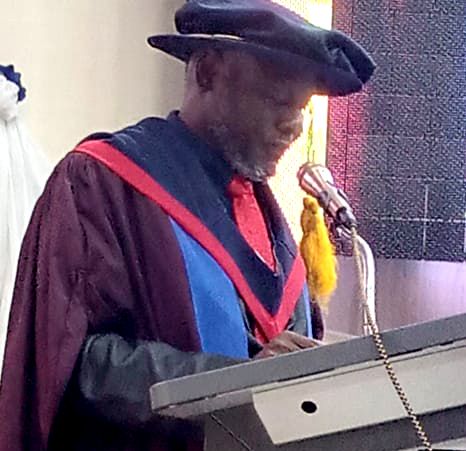
A Professor of Water Resources and Environmental Engineering at the University of Ilorin, Professor Adeniyi Saheed Aremu, has called for a fundamental shift in Nigeria’s solid waste management system, urging stakeholders to move from the conventional “cradle-to-grave” approach to a sustainable “cradle-to-cradle” model that promotes recycling, resource recovery and circularity.
Professor Aremu made the call while delivering the University of Ilorin’s 303rd Inaugural Lecture titled, “Municipal Solid Waste: Complexities in the Transition from Cradle to Grave,” on Thursday.
The engineering scholar described the management of municipal solid waste in Nigerian cities as a highly complex task influenced by technical, social, economic and environmental factors, stressing that effective waste management remains critical to public health, environmental sustainability and economic development.
According to him, Nigeria generates about 44.5 million metric tonnes of solid waste annually, with a significant portion remaining uncollected, thereby contributing to pollution, climate change and environmental degradation.
To address the growing challenge, Professor Aremu recommended the promotion of waste segregation at source through colour-coded waste bins and household-level sorting to facilitate recycling, reduce management costs and eliminate hazardous materials from waste streams.
He also advocated investment in modern waste management infrastructure, including Internet of Things (IoT)-enabled smart waste bins, material recovery facilities, waste-to-energy plants, sanitary landfills, transfer stations and fuel-efficient waste collection vehicles.
The professor emphasized the need for strategic spatial planning and periodic auditing of waste management data to guide decisions on the siting of waste bins and disposal facilities, improve service delivery and reduce environmental impacts.
Highlighting findings from his research in Ilorin, he noted that determining the optimal location, size and quantity of municipal waste bins remains one of the major operational challenges facing municipal authorities.
He explained that improper sizing of waste bins could result either in underutilisation or overflow, both of which undermine the efficiency of waste collection systems.
Professor Aremu further observed that while increasing the number of waste bins improves service coverage and waste collection rates, it also raises operational costs and emissions from collection vehicles, creating a need to balance social, economic and environmental considerations.
He urged governments to adopt standardised operational schedules and digital route planning for waste collection activities to minimise costs, reduce traffic-related delays and improve workforce productivity.
The don also called for sustainable cost-recovery mechanisms, including user fees, extended producer responsibility schemes, recycling initiatives and energy recovery programmes, while advocating the creation of markets for recycled products and recovered energy.
On the role of informal waste workers, Professor Aremu said scavengers and small-scale waste collectors should be integrated into government programmes and protected from social stigma, noting that they play a significant role in material recovery and recycling.
He equally encouraged greater private-sector participation in waste collection, landfill management and resource recovery, proposing a decentralised model in which government serves as regulator and facilitator while private operators provide services.
The inaugural lecturer stressed the importance of public enlightenment campaigns and stronger collaboration among stakeholders in areas such as technology transfer, funding, policy development and information sharing.
Professor Aremu recommended the development of a comprehensive national solid waste management master plan with clear targets, regulatory frameworks and sustainable financing mechanisms to improve waste management across the country.
He concluded that cleaner cities can be achieved by integrating spatial planning, indigenous road networks, land-use patterns and waste generation characteristics into practical engineering solutions, adding that breaking waste management challenges into structured and actionable goals remains the key to ensuring an efficient transition of municipal solid waste from generation to disposal.