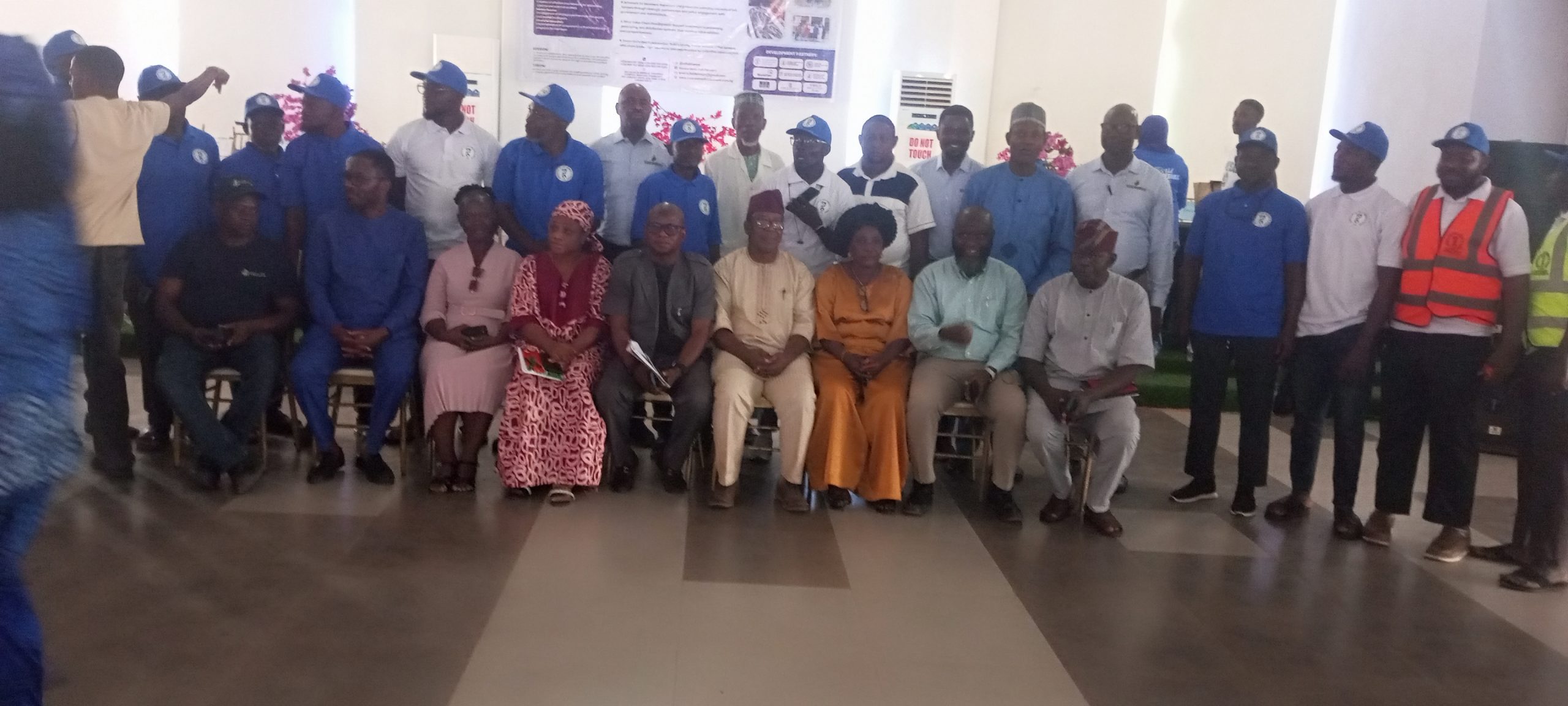
By Adeleke Gbenga
The significance of this year’s World Fisheries Day echoed and re-echoed throughout the expansive hall of the Diamond Arena along the New Yidi Road Ilorin, Kwara State on the 26th of November 2025. The significance echoed, magnified and came back several times, through some few words that have become part of the universal vocabularies such as “sustainability” ”global warming or climate change” “”water bodies pollution” “extinction or declining” “blue economy” ”human dangerous activities on nature” among others.
From these, it was crystal clear why the 2025’s World Fisheries Day chose to focus this year’s World Fisheries Day on “Sustainable Fisheries: A Responsible Action For Positive and Profitable Aquaculture Sector in Kwara State”. That was the theme anyway.
Two different things however emerged. Bashiru Abdulrazaq, the initiator of AQUA BASHY FISHING FOUNDATION said the fisheries and fishermen were the reason and focus of the 2025′ s World Fisheries Day. He believed the World Fisheries Day was centered on local fishes in the water bodies and the challenges they face. But Aquaculture loomed more larger as the reason for the year’s World Fisheries Day. This echoed loudly in the hall and even in the theme which was “Catalyzing Sustainable Fisheries And Responsible Aquaculture Action For People, Ocean And Climate” The significance of this was while human being appeared to have taken his destiny in his own hands, depending less on nature for sustainable fish production, livelihood and food security through culture bred fisheries and thus celebrating this, the declining of nature, gradual extinction of natural fishes from local water bodies seems to vindicate the evolution of aquaculture through human activities.
The feat of aquaculture is, it is capable of guarantee food security, livelihood and sustainability, being largely human dependent than nature. But this is where the problem lies. These human activities have overexploited and abused nature to the extent that nature now fights back with climate change or global warming. With this, even the aquaculture is facing the likelihood declining if not properly managed with a consideration for the health of the nature and environment. The big picture here is that, nature and environment are frigile!
The Association of Fish Farmers in Kwara State in conjunction with AQUABASH FISH FOUNDATION observed this year’s World Fisheries Day to reflect on this challenge among other challenges.
In the welcome address of the association’s President, Brigadier General Tayo Olasupo, he described the 2025’s World Fisheries Day in Kwara State as not just an observation of a date on the global calendar. But a turning point for the fisheries industry, a turning point for members’ livelihoods and the economic trajectory of Kwara State.

He says “For decades, fish farming in Kwara has been an occupation of resilience. We have weathered the storm of rising input costs, fluctuating markets and logistical bottlenecks. But today, we gather to declare that resilience alone is no longer enough. It is time for transformation”
Brigadier General Tayo Olasupo stressed here that fish farming in Kwara is present at a critical turning point.
He described Kwara as natural hub of the blue economy, reiterating that it is geographically destined for aquaculture greatness adding that, Kwara is a gateway between the North and the South. “We are blessed with the majestic stretch of the Niger River along Patigi and Edu, the flowing embrace of the Asa River and the rich basins of the Moro”
He however expressed fear asking the most critically significant question expressed above. He tasked the audience. “Nature has done its part. The question we must answer today is: Have we done ours?” He regretted that Kwara was yet to fully translate its water resources into wealth despite its immense aquatic potentials. He described aquaculture in Kwara as a potential worth billions if fully and adequately put to use.
“While we are a State of immense aquatic potentials, we have yet to fully translate our water resources into wealth. We have operated in silos, focusing on production while neglecting the value chains. We have focused on survival rather than scalability”
For Brigadier General Tayo Olasupo, sustainability is no longer a buzzword but a survival strategy in view of the economic reality of 2025. Sustainability for him means moving away from wasteful practices that pollute water bodies and degrade the stock. It means an understanding that “when we abuse the environment, the environment taxes our profit” This explains the reason for the gathering that emphasizes “profitability through sustainability”
Talking on the association’s vision which explains its quest for transformation to an industry from its present subsistence, Brigadier General Tayo Olasupo itemized the roadmap towards actualizing the vision such as: Need for a centralized processing incubation centre, data driven production and research integration, standardization for global markets and capacity building.
He thanked the administration of Mallam Abdulrahman Abdulrazaq for its commitment to livestock development, appealing to the administration for more strategic partnership.
The keynote address was delivered by Professor Jimoh Wasiu Adeyemi, Head of Department of Fisheries and Aquaculture, University of Ilorin who stressed that fisheries and aquaculture need to be engaged in such a way that the future generations will have its fair share in fish production and management and will equally have their profits. “We can only have this when we are responsible. Let us have an Aquaculture that will be environmentally friendly and sustainable that will not lead to the pollution of the water bodies” Professor Jimoh Wasiu Adeyemi stresses.
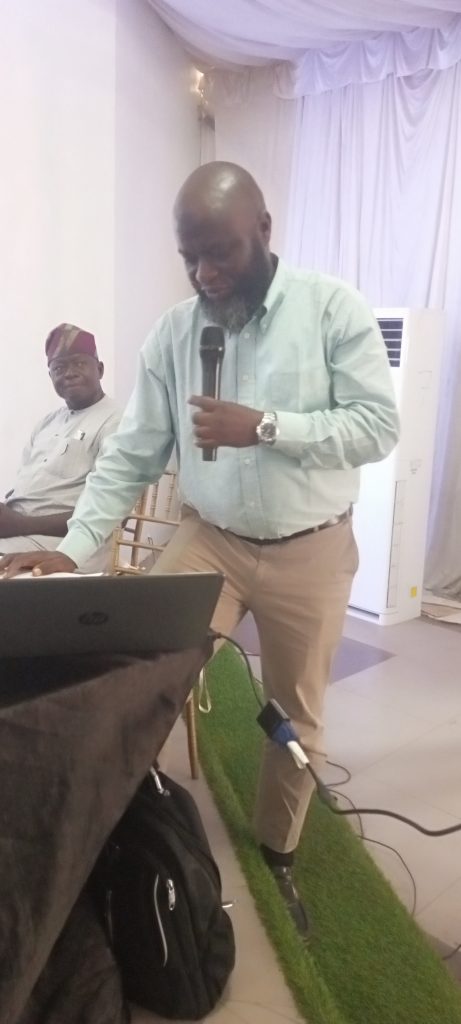
For Bashiru Abdulrazaq, the initiator of AQUA BASHY FISHING FOUNDATION, the time has come for the rescue of indigenous fisheries that are declining and going into extinction. He described this year’s World Fisheries Day as a day for the restoration of the indigenous fisheries through responsible fish farming and best practices.
He appealed to Federal agencies such as NSPRI, NCAM, ARMTI and Bank of Industry to rescue the indigenous fish industry.
He also called for more awareness on the need to encourage the consumption of indigenous fishes even as he advocated for reorientation of the local or indigenous fish farmers.
