The unfolding developments within the Kwara State chapter of the All Progressives Congress (APC) following the emergence of Rt. Hon. Salihu Yakubu Danladi as the party’s governorship candidate have exposed one of the most significant internal political debates the ruling party has faced since the 2019 “O To Ge” political revolution.
At the heart of the controversy is not merely the question of who emerged as the party’s candidate but the broader issues of internal democracy, stakeholder inclusion, party cohesion, succession management, and the future electoral strength of the APC in Kwara State.
One narrative is being advanced by a group identifying itself as the Kwara APC Elders Caucus. The group has questioned the process that produced the party’s governorship candidate and expressed concerns about the potential political consequences of the outcome. Their argument appears to be strategic rather than personal. They contend that the party may have overlooked broader consultations and failed to adequately consider the political realities that lie ahead of the 2027 elections.
According to the group, the APC should prioritize electability, acceptability, and party unity above all other considerations. They argue that unresolved concerns among stakeholders could weaken the party’s electoral prospects if left unaddressed.
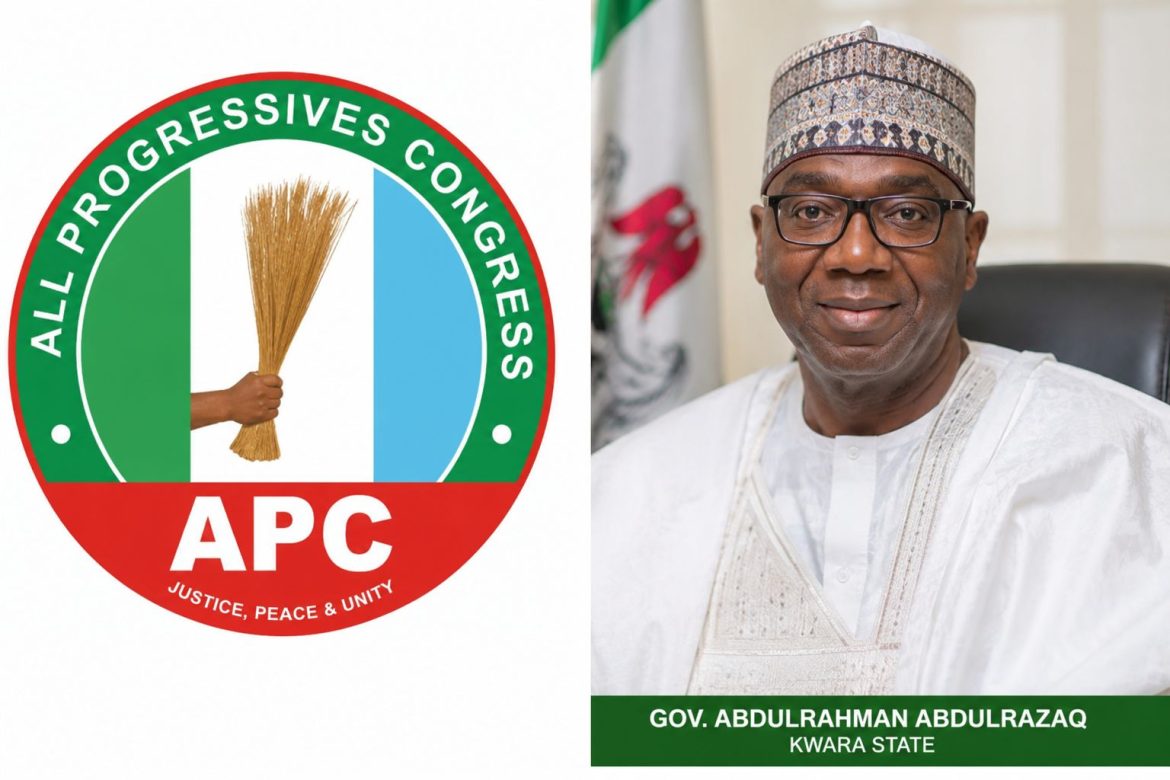
On the other hand, the official APC structure and recognized leadership in Kwara State maintain that the primary election was conducted in accordance with established procedures and that Danladi’s emergence reflected the wishes of party members. The leadership further argues that the candidate enjoys widespread support across the state and possesses the political experience, youthful appeal, and administrative credentials necessary to sustain and consolidate the achievements of Governor AbdulRahman AbdulRazaq’s administration.
The party has also challenged the legitimacy of the self-acclaimed elders’ caucus, insisting that no officially recognized state-wide APC Elders Caucus currently exists.
The intervention of the Kwara Progressive Coalition introduced a more nuanced perspective into the debate. Rather than directly attacking either side, the coalition emphasized the importance of dialogue, consultation, reconciliation, and institutional credibility.
Its position reflects a reality frequently observed in democratic politics: political parties become vulnerable when internal grievances are ignored, regardless of whether such grievances are ultimately justified.
The coalition’s statement also recognizes an important political truth—that perception can sometimes be as influential as reality. Even where a process is legally valid, concerns about inclusiveness and fairness can create political challenges if they are not properly managed.
For the APC, the controversy presents both a challenge and an opportunity.
The challenge lies in preventing internal disagreements from evolving into long-term divisions. Political history in Nigeria has repeatedly shown that unresolved disputes following party primaries often create conditions for defections, anti-party activities, voter apathy, and weakened campaign structures.
The opportunity, however, lies in demonstrating political maturity. A party that successfully manages disagreements, accommodates diverse interests, and unites stakeholders behind a common objective often emerges stronger and more resilient.
Governor AbdulRahman AbdulRazaq, as the leader of the party in Kwara State, occupies a strategic position in this regard. Beyond defending the outcome of the primary election, many observers believe the next phase should focus on extensive reconciliation efforts and confidence-building measures among all tendencies within the party.
For Rt. Hon. Salihu Yakubu Danladi, the debate presents both a political test and an opportunity.
While his supporters point to his victory in the primary election, legislative experience, and growing grassroots support, the concerns raised by some stakeholders suggest that he may need to invest considerable effort in building broader consensus across the party.
Successful candidates often understand that winning a primary election is merely the first stage of a much larger political journey. The more significant challenge is building a coalition that extends beyond those who supported them during the primary process.
Political inclusion, consultation, humility, and outreach to former competitors may therefore become critical components of his strategy moving forward.
Ironically, the current APC debate may also offer valuable lessons for opposition parties in Kwara State.
The controversy demonstrates that Kwarans are increasingly paying attention to issues of transparency, participation, and leadership selection. Any opposition party hoping to capitalize on the APC’s internal disagreements must also demonstrate that it offers a more credible, inclusive, and convincing alternative.
Otherwise, dissatisfaction within the APC may not automatically translate into electoral gains for opposition parties.
The references made by the elders’ group and the coalition to the APC National Working Committee and President Bola Ahmed Tinubu underscore another important reality.
Kwara remains a strategically important state for the APC at the national level. The party’s leadership in Abuja will likely be interested not only in retaining the governorship seat but also in ensuring that the APC enters the 2027 elections as a united political family.
Historically, successful ruling parties prioritize reconciliation after primaries because they understand that electoral victories are more easily achieved when internal conflicts are resolved early.
Beyond party politics lies an even more important consideration—the future of Kwara State itself.
Citizens are ultimately less concerned about internal party rivalries than they are about governance outcomes. Issues such as job creation, infrastructure development, quality education, healthcare delivery, security, agriculture, industrial growth, and youth empowerment remain the real priorities of ordinary Kwarans.
The current political debate should therefore serve as an opportunity for all political actors to shift attention toward substantive discussions about policy, governance, and the future direction of the state.
A mature political response would require all stakeholders to lower the temperature of the debate and embrace constructive engagement.
The APC leadership should continue its efforts at reconciliation and stakeholder engagement. Those raising concerns should pursue dialogue through institutional channels while maintaining their right to express legitimate opinions. Likewise, supporters of all tendencies should avoid inflammatory rhetoric capable of deepening divisions within the party.
Political disagreement is a normal feature of every democracy. What distinguishes mature political systems from unstable ones is not the absence of disagreement but the ability to manage disagreements without undermining institutions.
The ongoing conversation within the Kwara APC should not necessarily be viewed as a crisis but rather as a test of political maturity. Whether one agrees with the elders’ position, the party leadership, or the coalition, all sides appear to share a common objective: preserving the stability of the APC and ensuring the continued development of Kwara State.
As 2027 approaches, the ultimate winners will be those who prioritize unity over division, consultation over exclusion, and the collective interests of Kwara State above individual political ambitions.
The coming months will reveal whether the APC can transform this internal debate into an opportunity for greater cohesion or allow it to become a source of lasting political fragmentation. For the sake of Kwara State’s progress and political stability, many stakeholders will undoubtedly be hoping for the former.