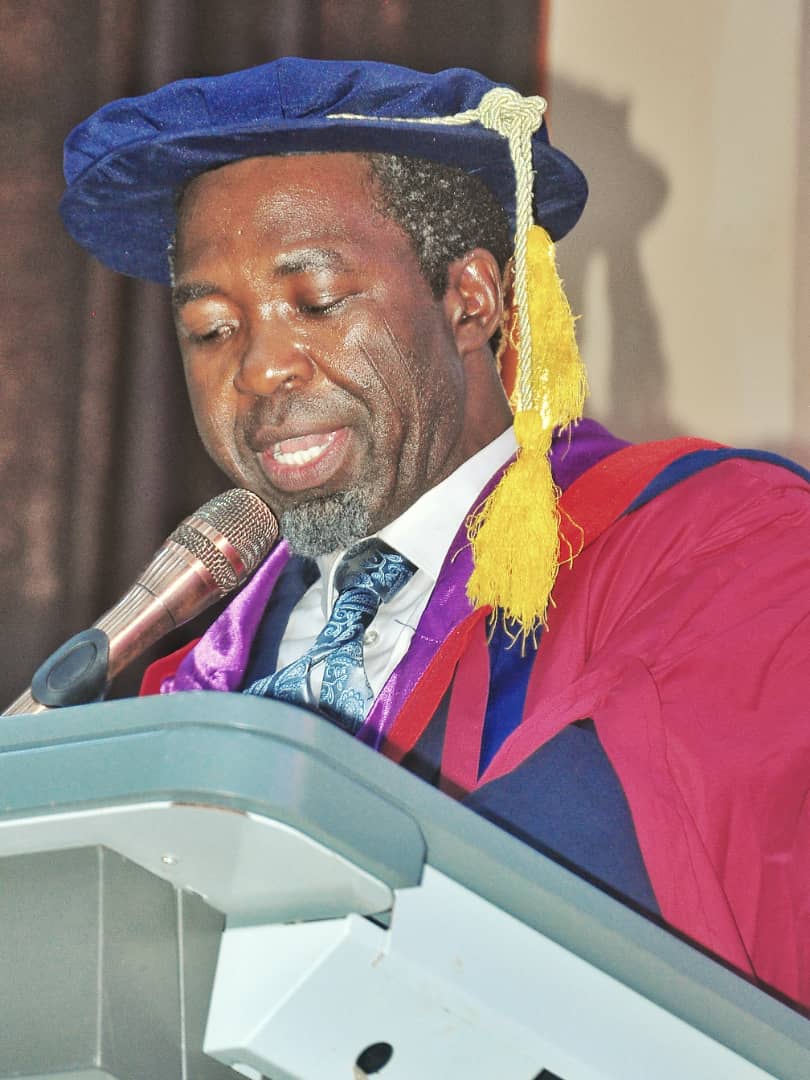
Citizens must be equipped with information, civic education, and meaningful opportunities to participate in governance if democracy is to deliver genuine development, a political scientist at the University of Ilorin, Professor Fatai Ayinde Aremu, has said.
Delivering the institution’s 302nd Inaugural Lecture titled “Equality as Illusion: Asymmetrical Dimensions of Politics and Policy in a Competitive World,” Aremu warned that governance becomes vulnerable to manipulation, elite domination, and unaccountable decision-making when ordinary citizens are excluded from policy processes.
The professor argued that while societies often proclaim ideals of equality, political and policy outcomes are largely shaped by asymmetries in power, access, information, and influence.
“An informed and engaged citizenry is one of the strongest safeguards against the concentration of power and the reproduction of asymmetry in society. Citizens who understand their rights and the workings of institutions are better positioned to demand accountability and influence public policy,” he said.
To address these inequalities, Aremu recommended that governments institutionalise what he described as equity-sensitive governance, including targeted interventions for marginalised groups, participatory budgeting, inclusive governance platforms, and stronger representation for women, youths, persons with disabilities, refugees, and internally displaced persons.
He also called on governments to prioritise civic education, expand public access to reliable information, and create more opportunities for citizen engagement through town hall meetings, citizens’ assemblies, policy consultations, and community monitoring initiatives.
Beyond domestic governance, Aremu urged Nigeria and other countries in the Global South to pursue strategic diplomacy, strengthen state capacity, and renegotiate international engagements through what he termed an “asymmetry lens” to reduce dependency and enhance their bargaining power in global affairs.
The scholar explained that asymmetry exists whenever actors operate from unequal positions of power, capacity, information, and influence. He described it as a condition in which the rules of engagement and eventual outcomes are shaped by structured imbalances rather than genuine equality.
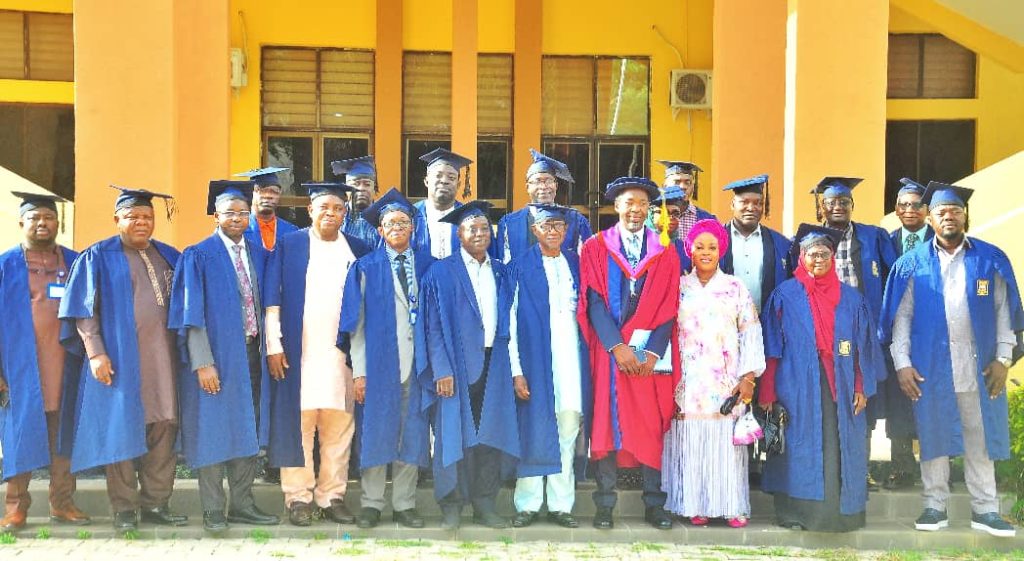
Drawing examples from international politics, Aremu argued that the global system remains deeply hierarchical despite frequent references to sovereign equality among states.
According to him, powerful countries possess disproportionate military, economic, and diplomatic influence that enables them to shape international norms, define threats, influence multilateral institutions and, in some cases, act outside established frameworks without significant consequences.
By contrast, weaker countries often operate within severe constraints and are compelled to adapt to decisions made by more powerful states.
The professor linked this argument to his earlier research on trade relations in East Asia, where he found that dependence on dominant powers often shapes the preferences and behaviour of weaker states.
At the domestic level, he said similar asymmetries exist between political elites and ordinary citizens. Although democratic systems promise equal citizenship and open competition, political and economic elites often enjoy invisible advantages through networks, institutional influence, access to information, and control of resources.
Aremu further examined the Asymmetrical Dyads Theory, associated with political scholar Brantly Womack, explaining that relationships between unequal actors are often characterised by differing perceptions and expectations.
He noted that stronger actors usually view such relationships as routine and stable, while weaker actors perceive them as highly consequential and potentially threatening.
According to him, these differences in perception often generate tensions and conflicts, not necessarily because interests clash, but because the actors interpret the relationship from different perspectives.
Contrary to the assumption that weaker actors are passive, he said they frequently employ diplomacy, coalition-building, and strategic engagement to pursue their interests despite structural disadvantages.
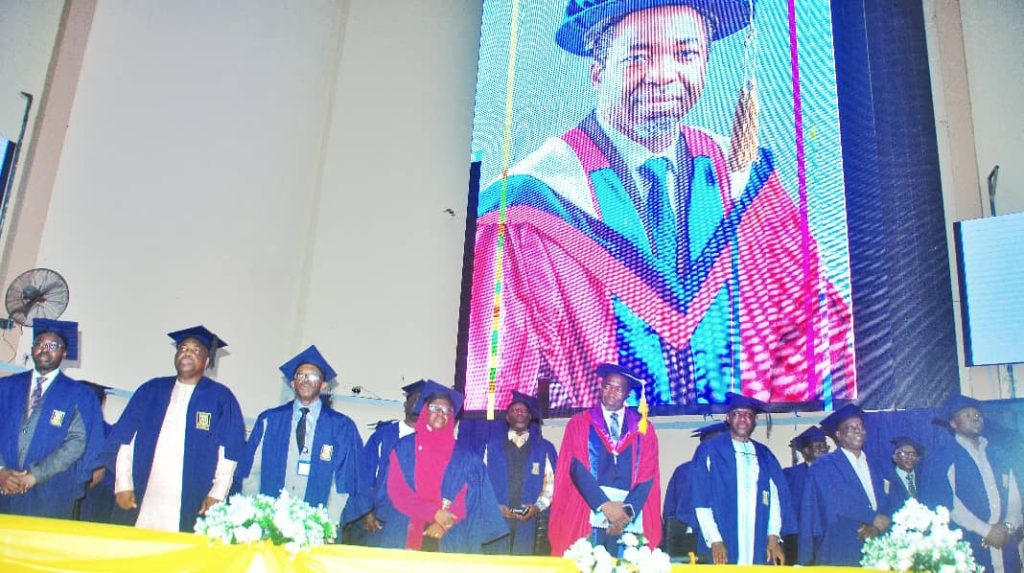
The professor also criticised the tendency of African scholars to rely heavily on theories developed in different historical and socio-economic contexts without sufficiently interrogating their underlying assumptions.
He called for a new generation of context-sensitive scholarship rooted in African realities.
“African scholars must begin not by asking which Western theory fits African realities, but what African realities reveal,” he said.
He urged universities and research institutions to encourage problem-oriented scholarship capable of generating concepts and theories from empirical African experiences.
Beyond theory, Aremu devoted considerable attention to governance and public policy, arguing that governments must abandon the assumption that all actors possess equal capacities and opportunities.
He recommended that public policies be designed around realistic assessments of power relations and existing inequalities.
To achieve this, he proposed the introduction of “Equality Concern Audits” across ministries, departments, and agencies to identify who benefits from policies, who is excluded, and how power structures influence outcomes.
The professor also advocated equity-sensitive governance through inclusive budgeting, participatory governance mechanisms, and targeted interventions for marginalised groups.
He stressed the need to strengthen state capacity, warning that weak states are often constrained by institutional weaknesses, economic dependence, technological deficits, and limited bargaining power.
For Nigeria, he recommended merit-based recruitment, a professional public service, long-term strategic planning, and increased investment in agriculture, manufacturing, technology, creative industries, and local value chains.
On foreign policy, Aremu called for smart diplomacy and stronger cooperation among countries of the Global South.
He urged Nigeria to continue leveraging platforms such as the and the while expanding partnerships with countries across Africa, Asia, Latin America, and the Middle East.
He further advised developing countries to renegotiate trade agreements, development partnerships, and security arrangements through an “asymmetry lens” to reduce dependency and secure greater benefits from international engagements.
The professor also called for the cultivation of asymmetry-aware and ethical leadership, arguing that leaders must recognise hidden inequalities in access, representation, and opportunity.
According to him, leaders should routinely ask critical questions before making decisions: Who benefits from a policy? Who may be excluded? And whose voices remain unheard?
In his concluding remarks, Aremu said the challenge confronting societies is not to pretend that political systems are symmetrical, but to learn how to govern wisely in an unequal world.
He described the issues of inclusion, fairness, and representation as moral, developmental, and human concerns that extend far beyond academic debate.
“The purpose of knowledge is not admiration; it is transformation. And the purpose of politics, at its best, is not power alone, but dignity,” he said.
