By Fatima Mohammed-Lawal
A Global Fund-supported sexual and reproductive health project has reached 22,481 residents across three local government areas of Kwara, achieving approximately 219 per cent of its target of 10,264 people.
Mr Williams Awotunde, the Jhpiego Kwara State Team Lead for the Integrated Sexual and Reproductive Health and Rights and Communicable Diseases (iSRHR-CD) Project, disclosed this on Thursday in Ilorin.
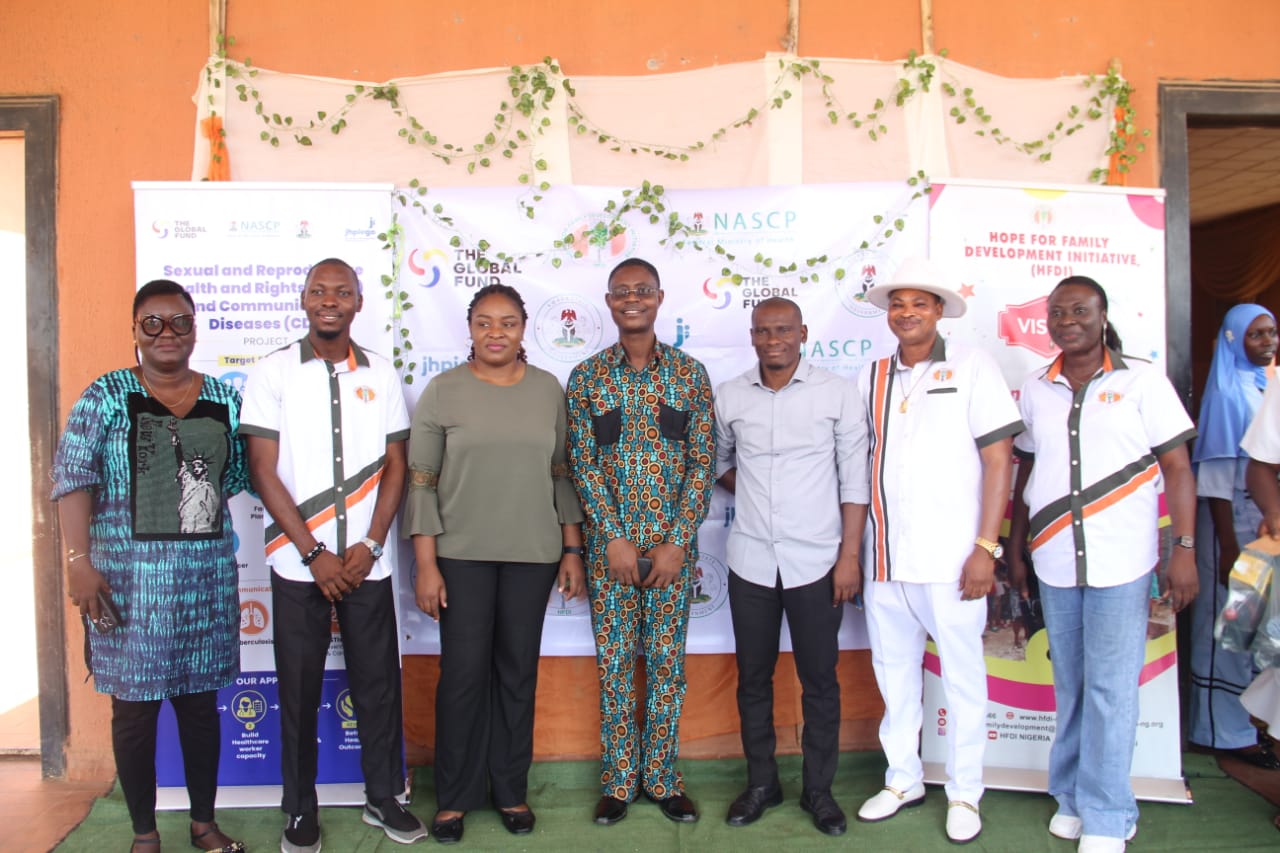
He spoke at a community-level close-out and dissemination programme organised by Hope for Family Development Initiative (HFDI) in Offa Local Government Area of Kwara.
Awotunde stated that the referral completion remains an area requiring attention, with 147 of the 221 referrals recorded in the third quarter of 2026 documented as completed.
“This underscores the need to strengthen referral tracking, follow-up and feedback between communities and health facilities,” he said.
Awotunde said the project covered 15 primary healthcare facilities across Asa, Moro and Offa LGAs.
According to him, interventions focused on improving access to integrated healthcare services and strengthening linkages between communities and health facilities.
“Generating a referral is only part of the journey. We must also ensure that people reach the appropriate service and receive the care they need,” he said.
The jphiego team lead added that referral follow-up, feedback and tracking remained important priorities.
He explained that the project is supported by the Global Fund and implemented by Jhpiego in collaboration with HFDI as its community-based implementing partner.
He pointed out that the support had strengthened healthcare workers’ capacity through training, mentoring and supportive supervision.
“The overall System Focus score of supported facilities improved from 59.8 per cent in June to 67.4 per cent in September 2026, representing an increase of 7.6 percentage points,” he said.
Awotunde added that six youth-friendly centres had been established and commissioned to improve adolescents’ access to appropriate sexual and reproductive health information and services.
Speaking earlier, the Executive Director of HFDI, Dr Aremu Akinyele, said 22,788 women had been sensitised on cervical cancer screening, exceeding the project target of 5,235.
He added that about 8,073 adolescents and young people had been informed about available sexual and reproductive health services, against a target of 2,361.
Akinyele also disclosed that 19,042 community members participated in sexual and reproductive health dialogues and events, while 91 community-led initiatives addressing identified health needs were recorded.
He identified limited availability of some essential health commodities, incomplete referrals and financial barriers to accessing services as challenges that required sustained attention beyond the project period.
Akinyele called on government institutions, healthcare providers, civil society organisations and community leaders to strengthen referral systems.
He also appealed for sustaining community mobilisation to preserve the gains made through the intervention.
