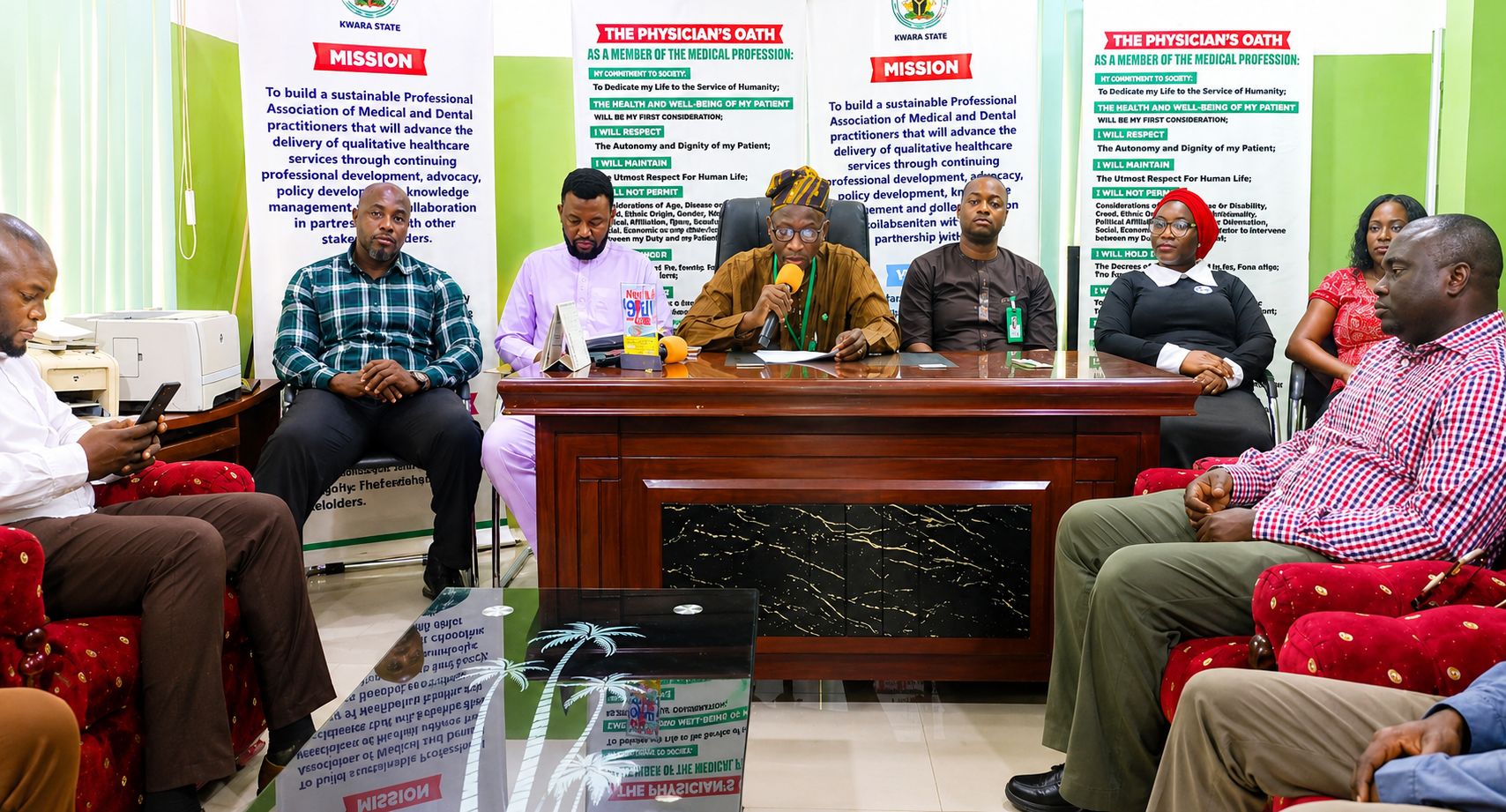
The Nigerian Medical Association (NMA), Kwara branch on Monday called for efficient referral system and stronger political commitment to healthcare reforms.
The Chairman of NMA-Kwara, Prof. AbdulRahman Afolabi made the call while addressing newsmen, as part of the activities of the 2026 Annual General Meeting (AGM) of the association in Ilorin.
The theme of the programme is entitled: “Medicine, Leadership and Public Policy: The Political Influence on Healthcare,” with a sub-theme focusing on “Referral System in Medical Practice: Current Practice, Challenges and the Way Forward.”
Afolabi observed that an effective referral system ensures that patients receive the right care, at the right level, and at the right time through seamless coordination between primary, secondary, and tertiary healthcare facilities.
According to him, it promotes continuity of care, improves patient safety, optimizes limited healthcare resources, and significantly enhances clinical outcomes.
He stressed that effective leadership and evidence-based public policies are essential to improving health care across the country.
Afolabi said healthcare delivery is influenced not only by the competence of medical professionals but also by government policies on financing, workforce development, infrastructure, health insurance, medical education and access to essential medicines.
He described a functional referral system as a critical component of an efficient healthcare system.
According to him, in order to decongest tertiary hospitals and improve patient outcomes, there is need to strengthen referral and counter-referral protocols and improving communication among healthcare providers.
“There is also need to ensure proper documentation, expanding ambulance and emergency transport services and deploying digital health information systems and addressing manpower shortages that will reduce delays in accessing specialist care,” he said.
Afolabi commended the Kwara Government for investments in health infrastructure, revitalisation of primary healthcare centres, expansion of health insurance coverage and recruitment of healthcare workers.
While appreciating these efforts, the NMA chairman called for sustained investment in emergency medical services, digital health technologies, specialist manpower development, healthcare financing and the strengthening of the referral system.
He urged governments at all levels to involve healthcare professionals in the formulation, implementation and evaluation of health policies, describing evidence-based policymaking as critical to sustainable healthcare reforms.
He reaffirmed the commitment of the association in promoting the welfare of medical practitioners, improving working conditions, supporting continuous professional development and advocating quality, affordable, equitable and patient-centred healthcare for all Nigerians.
Afolabi also assured residents of Kwara that medical doctors would continue to provide ethical and quality healthcare services despite the challenges facing the health sector.
The association expressed optimism that deliberations at the AGM would produce practical recommendations to shape the future of healthcare delivery in Kwara and Nigeria.
