By Ramat Ayo Ismail
For Mallam Shuaib Abubakar, a resident of Alanamu in Ilorin and father of five, the decision to embrace family planning was born out of experience.
His first three children were born at intervals of about 11 months to one year. The closely spaced births, he recalled, placed considerable pressure on his family, particularly his wife, who had little time to recover from one pregnancy and childbirth before becoming pregnant again.
Abubakar said his wife frequently sought medical attention and sometimes struggled to provide enough breast milk for the children. He also observed that the children subsequently fell ill more often. At one point, he estimated that the family was spending about ₦70,000 monthly on medical care.
The experience eventually forced the family to rethink how they approached childbearing.
After receiving information about family planning, Abubakar supported his wife in making informed decisions about spacing their children. Their subsequent children were born about three years apart, giving his wife more time to recover and allowing the family to pay greater attention to healthcare, feeding and education.
For Abubakar, family planning became more than avoiding pregnancy. It became a means of managing the responsibilities that came with raising children.
His experience reflects a wider conversation taking place across Kwara State, where decisions about childbearing are shaped not only by health considerations but also by religion, culture, family expectations and economic realities.
In many communities across the state, children are regarded as gifts from God, while large families may be associated with blessings, strength and social status. Yet the rising cost of living, concerns about maternal health and the demands of raising children are encouraging some families to reconsider how they space births. That is where the emerging role of trusted community voices becomes important.
When Faith and Tradition Enter the Conversation
In Shao, Moro Local Government Area, Chief Imam Barrister Adam Oloruntoyin Jamiu believes religious understanding can help remove some of the barriers surrounding family planning.
According to him, Islam permits family planning when it is practised responsibly, particularly when the health of the mother and welfare of the children are considered.
Jamiu said he addresses misconceptions during Friday (khutbāt) sermons and pre-marital counselling, using Islamic teachings to help couples understand responsible parenthood and child spacing.
He cited the historical practice of ‘azl, or coitus interruptus, a traditional withdrawal method used for contraception, as recorded in authentic Hadith collections, including Ṣaḥīḥ al-Bukhārī and Ṣaḥīḥ Muslim. In one narration, the companion Jābir ibn ‘Abdullāh reported that the companions practised ‘azl during the lifetime of the Prophet Muhammad and that he did not forbid them.
For Jamiu, the historical precedent provides an opportunity to discuss contemporary family planning with Muslim couples without presenting it as a conflict between healthcare and faith.
He said his preaching and counselling had encouraged more young couples to seek religious guidance before visiting health facilities, estimating that at least three couples consult him each week.
FOMWAN Amira, Hajia Biliqis Modupe Oladimejji, similarly believes that knowledge is essential to correcting misconceptions.
“There are so many misconceptions around family planning in our communities. We must correct them with knowledge. Islam does not forbid spacing of children,” she said.
Oladimejji said responsible parenthood is consistent with Islamic values of preserving life, protecting health and maintaining family dignity. She urged husbands to participate actively in family planning decisions and counselling rather than leaving the responsibility entirely to women.
She also called for stronger collaboration among Imams, Islamic scholars, traditional rulers and healthcare providers, particularly through mosques, schools and markets.
The argument is straightforward, when accurate health information comes through people communities already trust, conversations that might otherwise be difficult can become easier.
The conversation is also evolving within Christian communities.
Rev. Taiwo Aweda, Pastor of UMCA Rehoboth City in Oyun, said although the Bible does not prescribe a specific interval between births, Christian couples can apply wisdom and responsible planning when making decisions about their families.
He acknowledged that some Christian leaders had previously been sceptical or reserved about family planning but said changing social and economic realities had made the subject increasingly important.
Aweda believes churches can help by creating safe spaces where couples receive accurate information and discuss responsible parenthood.
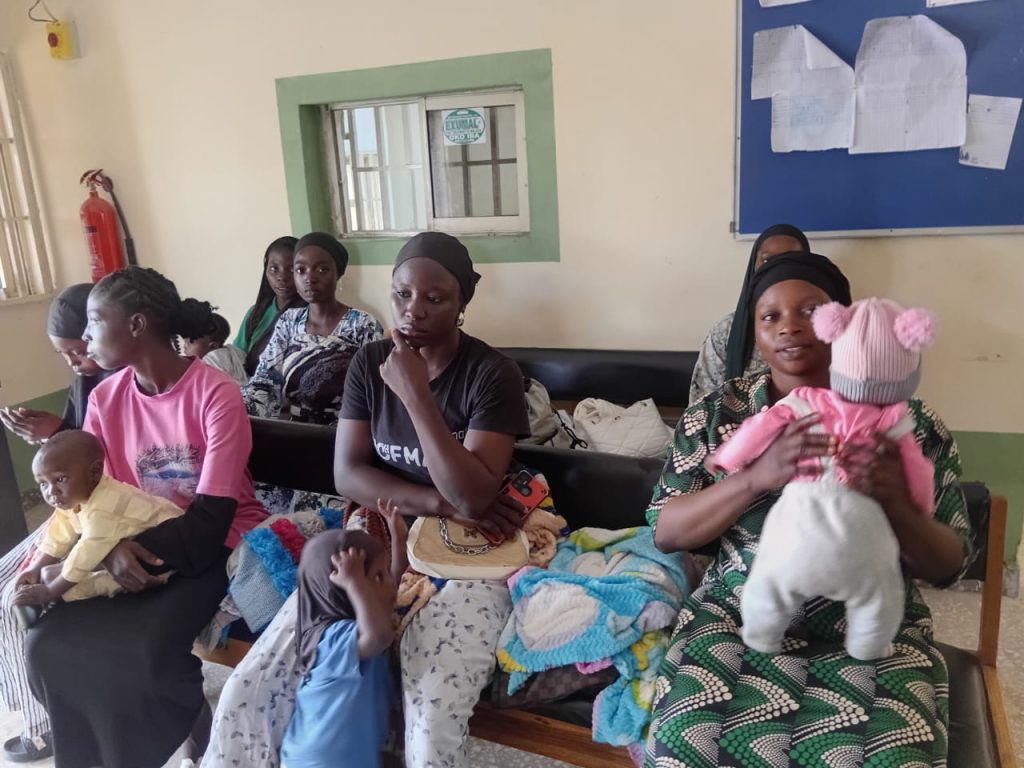
Evangelist Gladys Aina, Chairperson of the Kwara State Women Wing of CAN (WOWICAN), also emphasised responsible parenthood, while noting that approaches to family planning differ among Christian denominations.
She said couples should consider their ability to provide care, education, healthcare and other necessities before deciding to have more children.
According to her, biblical passages such as Genesis 1:28, which speaks about fruitfulness and multiplication, and Psalm 127:3, which describes children as a blessing, highlight both the value of children and the responsibility attached to raising them.
Her church promotes the Billings Method of Natural Family Planning, with selected members trained in its use. It does not encourage contraceptives, with some members viewing them as comparable to terminating pregnancy.
Other Christian denominations, she noted, may accept methods they believe do not intentionally terminate an existing pregnancy.
Religious institutions are not the only community structures influencing attitudes.
Alhaji Shuaib Aremu Zubair, Magaji Aare of Ilorin and a senior traditional ruler in the Ilorin Emirate Council, said traditional leaders are working with relevant structures to encourage child spacing and greater understanding of family planning.
Community structures, he explained, provide an avenue for traditional and religious leaders to address misconceptions, encourage male involvement and promote modern family planning services.
He attributed some of the progress to the work of the Kwara State Ministry of Health and its partners, noting that sensitisation and social mobilisation activities are taking place across Ilorin and other parts of the state.
Zubair said acceptance is not uniform. Education, religion, location and economic circumstances continue to influence attitudes, with differences often noticeable between urban and rural communities.
This makes community-level engagement particularly important and it also explains why the response has had to go beyond awareness campaigns.
From Awareness to Access
Mrs Bashirat Jatto, the State Family Planning Coordinator, said modern contraceptive use has improved significantly, with the modern contraceptive prevalence rate (mCPR) rising to 38.8 per cent, compared with 9.9 per cent recorded in 2023–2024, according to the latest mid-year NDHS figures.
Historical data also show fluctuations in modern contraceptive use. Among currently married women aged 15–49, the 2013 NDHS recorded modern contraceptive use at 27.7 per cent, while the 2018 NDHS recorded 17 per cent.
Jatto attributed the recent progress to sustained interventions by MSI Nigeria Reproductive Choices, formerly Marie Stopes International, which began supporting family planning in Kwara in 2013.
One important strategy has been to bring religious and traditional leaders into the health system’s response.
They participate in structured orientation workshops where they receive information on family planning, maternal health, relevant religious perspectives and referral pathways.
Jatto said more than 50 public-sector healthcare workers had also been trained in counselling and the provision of long-acting reversible contraceptives (LARCs), alongside traditional and faith leaders across the three senatorial districts of the state.
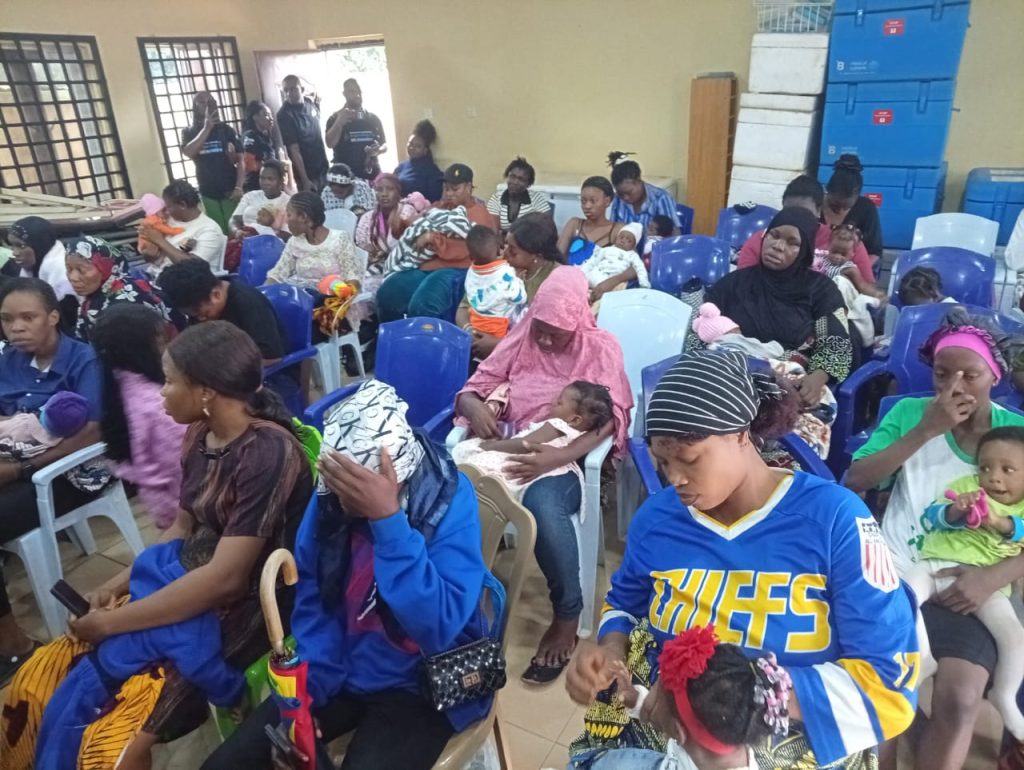
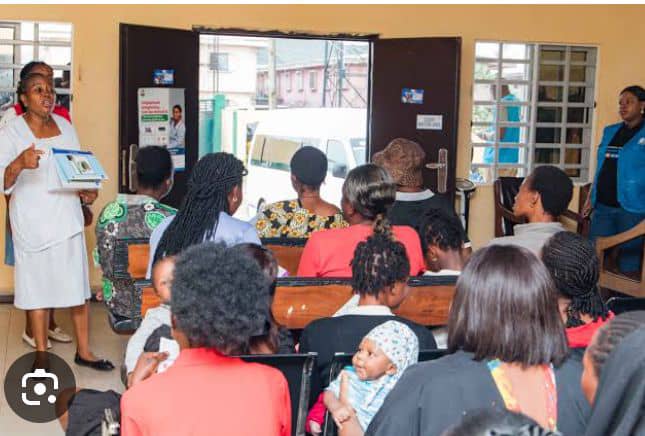
Services are promoted through market-day discussions, clinic sessions linked to immunisation and antenatal care, house-to-house sensitisation and targeted community advocacy.
Community agents also use trackable referral cards to connect potential clients with health facilities. According to Jatto, the system generates thousands of verified client visits annually.
But she stressed that changing family planning behaviour requires more than making contraceptives available. The programme has therefore combined demand generation with provider training, supportive supervision, quality assurance and improved commodity availability.
Jatto said the approach has resulted in improved access to facilities, stronger provider skills, particularly in LARC services, better availability of commodities and consumables, and improved documentation.
Jatto noted that MSI currently supports 42 health facilities across Kwara State through interventions that combine community demand generation, capacity building, commodity support and quality assurance.
In Ilorin South, high-volume facilities include Children Specialist Hospital, Sobi Specialist Hospital, Civil Service Hospital, Kulende Health Centre, Ero-Omo Health Centre and Olufadi Primary Health Centre.
Data comparing the first quarter of 2024 with the first quarter of 2026 showed an increase in new family planning acceptors in the area.
For Muhammad Dan Baba, Programme Officer, Kwara, the intervention is not simply about placing contraceptives in facilities.
MSI works with state governments to strengthen family planning services in selected primary healthcare facilities. Support includes provider training, monthly clinical supportive supervision, procurement and distribution of consumables and medical instruments, last-mile delivery of commodities and data quality assessments.
Among the facilities supported under the programme are Cottage Hospital, Igboro; Adewole Cottage Hospital; Amoyo Primary Health Care Centre; Civil Service Hospital; Ero Omo Health Centre; Tanke Health Centre; Ijagbo Basic Health Centre; Igosun Basic Health Centre; Ojoku Basic Health Centre; Jebba Basic Health Care Centre; Tepatan Health Centre;
Others are: Offa General Hospital; Ojomu Health Centre; Orolodo Primary Health Centre; Ajase-Ipo Cottage Hospital; Oke-Ola Oro Healthcare; Omu-Aran General Hospital; Pakata Health Centre; General Hospital, KWASUTH; Adeta/Adewole Healthcare; Alanamu Health Centre; Kulende Health Centre; Oke Ogun Health Centre; and Edun Health Centre.
He said that MSI-supported teams conduct market and clinic-day talks, stakeholder advocacy, male engagement and reproductive health education for young adults and adolescents. Outreach activities also provide free family planning services to women and girls in hard-to-reach communities.
Dan Baba said the interventions have contributed to increased awareness and uptake, with programme data subjected to triangulation and data quality assessments.
But the work faces significant challenges. High staff attrition, inadequate counterpart funding, insecurity and kidnapping, as well as poor roads, continue to affect service delivery.
For Dan Baba, sustainability depends on government ownership and leadership. Donor support remains important, but stronger government involvement is needed to ensure that improvements continue beyond individual projects.
What Women Find at the Clinic
At Kwara State University Teaching Hospital, the Head of the Family Planning Unit, Mrs Mustapha Bukola, said injectable contraceptives are among the methods available and can be highly effective when used as prescribed.
At Alanamu Primary Health Centre, Ilorin, family planning provider Hajia Alasinrin Nurat said method selection depends on several factors, including a client’s health, age, sexual activity, number of sexual partners and whether she wants more children in the future.
“No single method is appropriate for everybody,” she said.
Clients are counselled about possible side effects, which may include changes in menstruation, bleeding, headaches and changes in weight. She added that some women initially become worried when they experience changes in their menstrual pattern, but counselling helps them understand what may occur with different hormonal methods.
Some implant users, she added, remain satisfied with the method for years and return when it is due for replacement. Injectable contraceptives and implants are among the commonly used methods at the facility.
“We then take it upon ourselves to counsel them that it is not what they think it is,” Nurat said.
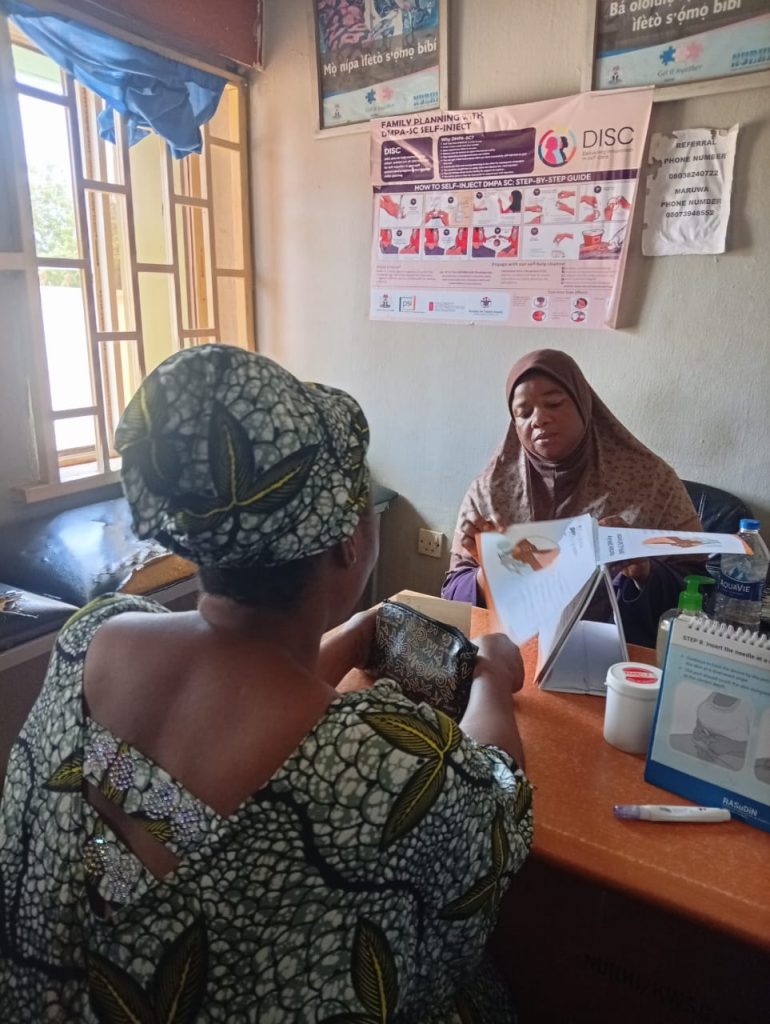
For women who have already experienced the benefits of spacing, however, family planning can become a practical choice rather than an abstract health message.
Mrs Muhammad Habibat has used injectable contraception for four years and regularly returns for renewal at Alanamu Primary Health Centre, Ilorin.
Mrs Adola Ayodeji, a 38-year-old fashion designer in Ilorin and mother of four, chose an implant after receiving counselling. She said she maintains contact with health workers and has no regrets about her decision.
Their experiences demonstrate an important part of the solution. Women need not only access to methods but also accurate information, respectful counselling and the freedom to choose what works for them.
The Gains and the Gaps
Kwara’s experience suggests that changing family planning behaviour requires more than placing contraceptives in health facilities.
It requires conversations in mosques, churches, markets, homes and community meetings.
Religious leaders can help address misconceptions. Traditional rulers can influence community attitudes. Healthcare workers can provide accurate counselling and help clients choose methods suited to their circumstances. Government can strengthen financing and commodity distribution. Men can become partners rather than observers.
The progress, however, is not without vulnerabilities. Funding constraints, commodity availability, health-worker retention, insecurity, poor roads and persistent misconceptions can still undermine gains made so far. Differences in religious and cultural attitudes also mean that acceptance will not happen at the same pace everywhere.
For families like Abubakar’s, however, the conversation has already produced a tangible change. Spacing births gave his wife more time to recover and the family greater opportunity to plan around the needs of their children.
That is perhaps the clearest indication of why the conversation matters.
Family planning is not simply about contraception. It is about informed choice, healthier mothers, children who receive adequate care and families that are better prepared for their responsibilities.
In Kwara, the question is gradually shifting from whether families should plan their births to how they can make informed choices that respect their health, faith, culture and circumstances.
The journey is far from over. But as religious and traditional leaders increasingly join health workers, government and communities, some long-standing barriers are beginning to give way to dialogue, understanding and informed choice.
