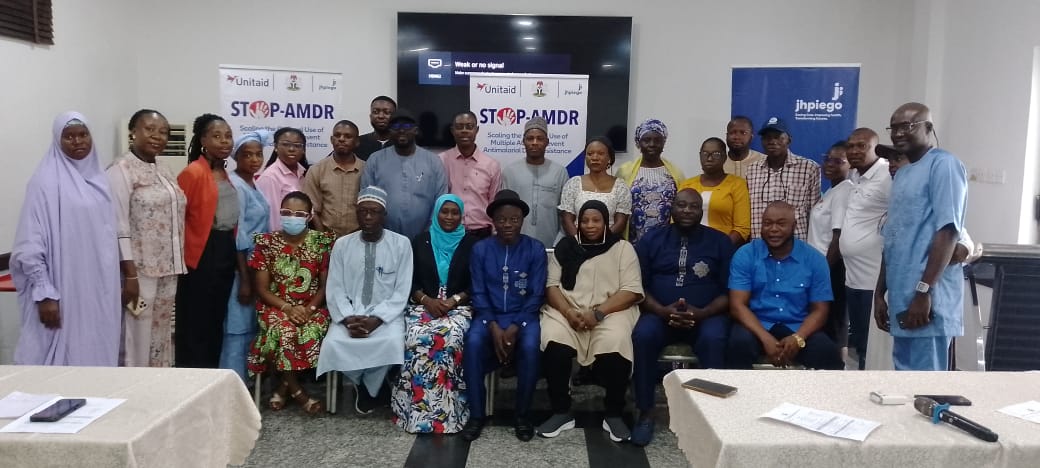
The Kwara State Government, in collaboration with its development partners, has inaugurated the State Malaria Advocacy, Communication and Social Mobilization (ACSM) Committee and the Malaria Social Mobilization Group as part of efforts to strengthen malaria prevention and control across the state.
The inauguration, held in Ilorin, brought together government officials, development partners, health stakeholders, and community representatives committed to advancing malaria elimination in Kwara State through increased advocacy, community engagement, and behavioural change communication
Declaring the ACSM quarterly meeting open in Ilorin ,the Director Public Health Health,Dr.Oluwatosin Fakayode observed that malaria cases are linked to environmental factors.
The Director who spoke through the Head of Malaria Case Management in Kwara State, Dr Kazeem Oladapo explained that malaria transmission is driven by the environment where mosquitoes breed and survive.
The expert observed that more than half of all malaria cases in Nigeria can be traced directly to environmental factors.
Quoting the National Malaria Elimination Programme, he pointed out that malaria transmission is driven by environmental conditions that allow mosquitoes to breed and survive.
Dr Fakayode disclosed that through the efforts of the State government, malaria prevalence was reduced to the bearest minimum
In her welcome address the State programme Manager Malaria Mrs Latifat Abdullahii said to achieve effective Malaria elimination and control, stakeholders and policy makers must be committed and collaborate on tackling the diseases.
“The purpose of the meeting is to coordinate ACSM activities in the State. The focus is to drive community participation and ownership of Malaria prevention and to increase uptake of Malaria intervention especially in health facilities,” she said.
In his address, Mr Jeremiah Ngutor-Ulaa,
the Data Analyst, John Hopkins Program for International Education and Gynaecology (Jhpiego) STOP AMDR project, said that the programme is expected to bring together all stakeholders on malaria elimination and control.
Ulaa added that the goal is ensuring that every infrastructure works to eliminate Malaria across Kwara and by extension other parts of Nigeria.
He expressed hope that Nigeria will not experience anti-malarial drug resistance
“There is need to deploy multiple therapy for treatment spectrum. Jhpiego is leveraging on existing structure and will collaborate to drive demands and accountability tools to advise on areas to support.
Speaking on the overview of Malaria situation in Kwara, the ACSM Desk Officer, Mrs Yemisi Ajala stated that leading causes of Malaria in the State includes climate, environment, behavioural and social causes among others.
Ajala observed that there is low inconsistent use of long lasting insecticidal nets in households in the State.
She however pointed out that the State Government has shown commitment towards the control of the Malaria disease in the State.
According to her, the government has been engaged in mass Insecticide Treated Nets (ITN) distribution, Seasonal Malaria Chemoprevention for children, community clean-up campaigns, and “Test, Treat,
Ajala added that community members must become agents of change by promoting preventive interventions if the state is to achieve timely malaria elimination. She described the inauguration as a critical step towards achieving the state’s malaria control goals.
The newly inaugurated committees are expected to support advocacy efforts, mobilize communities, promote awareness on malaria prevention, and encourage residents to access available malaria services.
They will also work closely with relevant stakeholders to improve public awareness and strengthen community participation in malaria control activities across the state.
Stakeholders at the event reaffirmed their commitment to working together to reduce the burden of malaria and improve the health and well-being of residents thcrough sustained advocacy, communication, and social mobilization initiatives.
