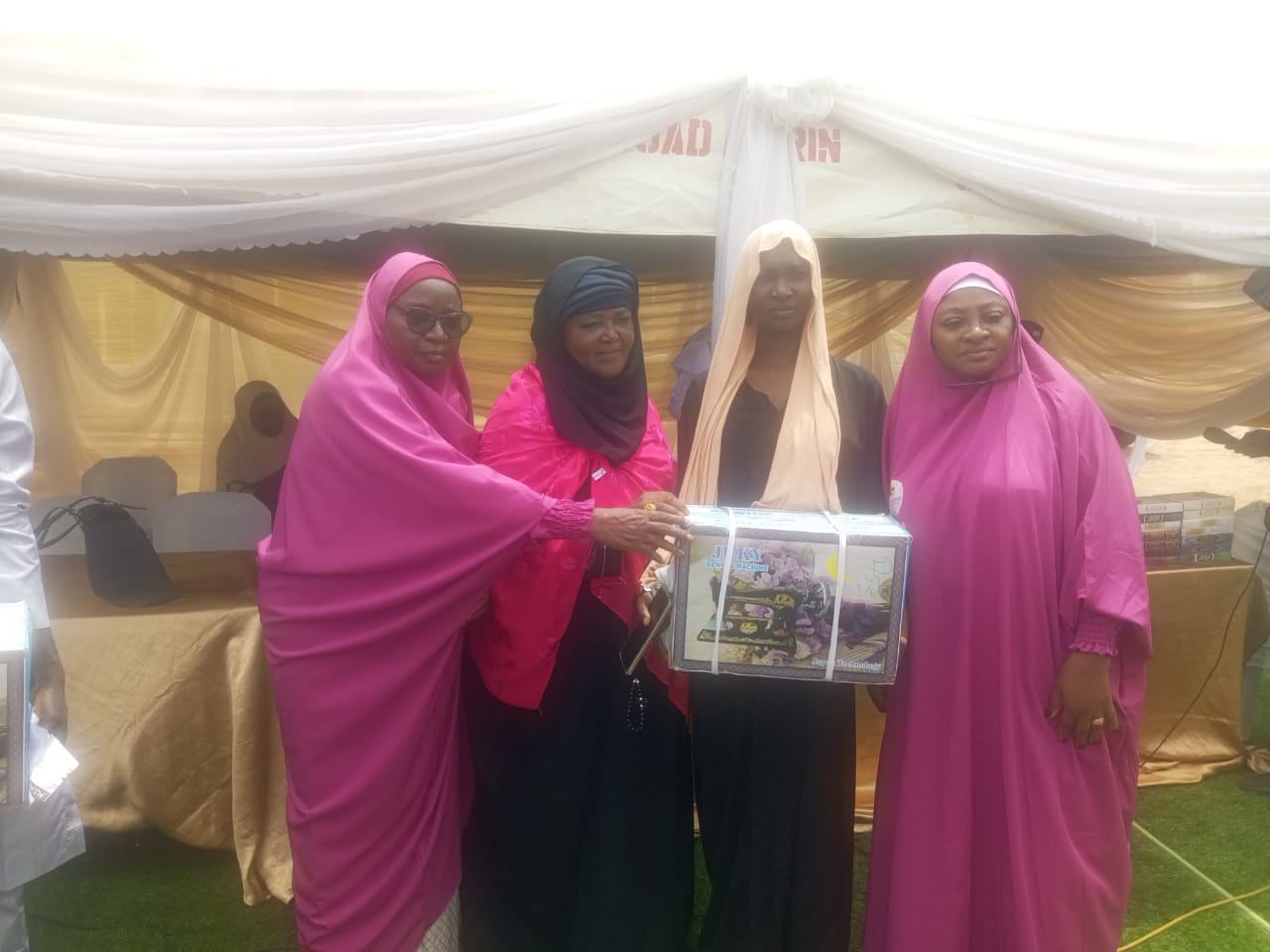
A Non Governmental Organization, Baytul Shihab Initiative has unveiled a vocational centre on skills acquisition for the teeming youth in Kwara.
The inauguration of the vocational centre is part of the activities organized to mark the 5th Anniversary of the organization.
In her opening address, the founder of Baytul Shihab Initiative, Hajia Siddyqah Amosa, said the centre is expected to empower youth and women on skills acquisition in the State.
She explained that the vocational centre also include programme on financial literacy that would empower youth to be self sufficient.
Amosa said the initiative was established out of the conviction that university education alone can no longer guarantee employment in today’s challenging economic environment.
She noted that many graduates across Nigeria now face an increasingly competitive labour market where available white-collar jobs are insufficient to meet the growing demand.
“Baytul Shihab was born out of a deep conviction that in today’s world, a university degree no longer guarantees stable employment,” she said.
She explained that the Initiative was inaugurated with the aim of empowering women, youths, and vulnerable members of society through skills development and moral education
According to her, there was a time when obtaining a university degree almost automatically opened doors to government employment, private-sector opportunities, and multinational organisations.
However, she observed that the current economic reality has made vocational skills and entrepreneurship necessary tools for survival and self-reliance.
Amosa called for greater investment in skills acquisition and entrepreneurship as alternatives to the dwindling opportunities in the formal employment sector.
Hajia Amosa, a retired Permanent Secretary in the Kwara State Civil Service
She said the organisation’s mission goes beyond economic empowerment, as it also focuses on Islamic education and support for persons with disabilities.
“The organisation also supports
scholarships for orphans, marriage counselling, Ramadan feeding programmes, and public enlightenment campaigns,” she said.
The founder emphasised that empowering women economically and morally would strengthen families and contribute positively to society.
“When women are empowered, self-aware, and morally grounded, they are better positioned to succeed and make meaningful contributions to their families and communities,” she said.
She added that the organisation’s vocational training programmes provide beneficiaries with practical skills and starter equipment, including sewing machines, make-up kits, and soap-making materials, to enable them establish small businesses.
The anniversary celebration also featured the unveiling of a vocational training centre and the selection of nominees for various skills acquisition and financial literacy programmes.
Amosa urged beneficiaries to maximise the opportunities provided and extend the benefits of their acquired knowledge and skills to others in their communities.
She also appealed to corporate organisations, philanthropists, and development partners to support the initiative through funding, donations, and material assistance to enable it reach more vulnerable people.
Also speaking, Hajia Afusat Ibrahim, Permanent Secretary, Kwara Ministry of Women Affairs and Social Development, emphasised on the importance of vocational training for women and youth.
“We must accept reality as it is. Jobs are no longer readily available. Women must embrace vocational training to generate income and support their families,” she advised.
In his paper presentation, the Guest Lecturer at the programme, Dr. Kamaldeen Ajijolakeu, described the Qur’an as a complete guide for human life.
The Cleric urged Muslims to read and understand the Holy Qur’an, adding that religious leaders must serve as mirrors of society through their conduct and teachings.
He stressed the importance of applying Islamic teachings in daily life and called for justice and accountability in society.
Ajijolakeu stated that individuals involved in banditry and killings should face severe punishment, describing such action as consistent with the principles of justice contained in Islamic teachings.
